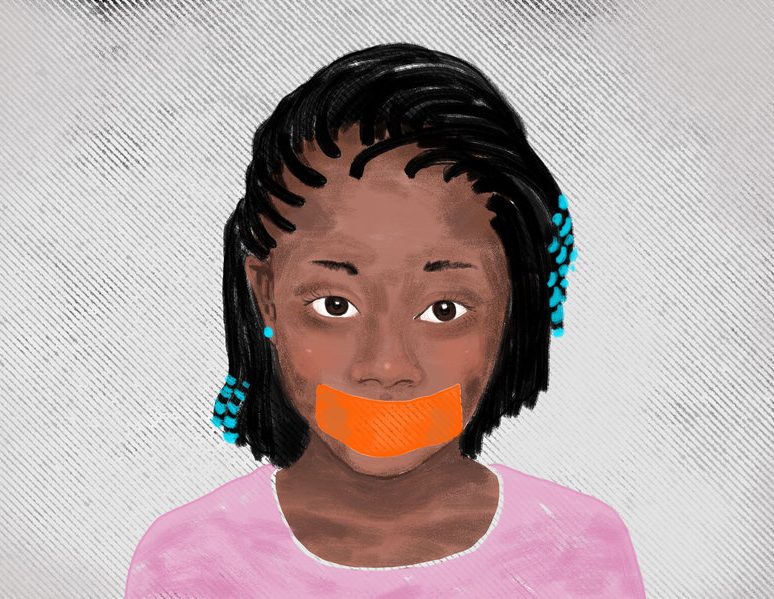

This is a very important topic that was inspired by personal experiences, although I believe certain boundaries were crossed, I was labelled “over protective” and “over the top” and even being told I have a “distorted mentality” for being a concerned mother, one that sees reality. Thankfully my child was not harmed. I thank God for that. This was also inspired by a friend of mine who felt undermined as a mother, her clear boundaries regarding her child was not respected. Although these situations did not end tragic there’s so many untold stories where boundaries were crossed that resulted in the unfortunate reality of abuse or worse.. let’s talk about it.
It’s time we have the uncomfortable but necessary conversation – about abuse, and how following certain cultural norms without question can create the perfect environment for it to thrive.
Many of us are raised to respect our elders, trust our family, and never speak out against what’s “normal” in our communities. But what happens when what’s considered normal is actually toxic – or worse, dangerous?
Let’s talk about it.
Cultural Norms Can Breed Abuse
In many cultures, there’s an unspoken rule:
“Family comes first.”
Or worse: “What happens in this house, stays in this house.” I grew up with this teaching. These mentalities are the reason there’s a generation of children left feeling their parents are toxic. They value more the family image over their children’s wellbeing.
These ideas may have been born from a place of community and tradition, but when taken to the extreme, they create a culture of silence, where abuse is hidden, minimized, or dismissed – all in the name of “keeping the family together.”
This isn’t just opinion – research shows that cultural norms often silence victims. A study by Gilligan and Akhtar (2006) found that in many collectivist communities, the fear of dishonoring the family or disrupting social harmony often stops women and children from speaking out about abuse. When silence is the norm, abuse hides in plain sight.
The problem? Abusers thrive in silence.
And cultural norms that prioritize appearances, obedience, or blind loyalty can give them just that — a shield, a place to hide, and generations of people too afraid or conditioned to speak up.
The Importance of Knowing Right from Wrong:
Tradition does not equal truth.
Just because something is “how we’ve always done it,” doesn’t mean it’s right.
Many of us have been taught that:
• Children should never question adults
• Uncles or family friends can be trusted without boundaries
• Discipline means control or even physical harm
• Speaking up is disrespectful
But right and wrong are not defined by culture — they’re defined by impact.
If someone’s behavior causes harm, fear, shame, or lasting trauma, it is wrong, no matter what culture, title, or tradition says.
The Undermining of Mothers: A Silent Battle
Let’s talk about mothers.
Too often, mothers are the first to notice when something feels off – whether it’s a person, a situation, or a shift in their child’s behavior. But when mothers speak up, especially against a cultural norm or family figure, they’re often:
• Labeled as “overprotective”
• Told their just imagining things
• Accused of creating division in the family
• Silenced just for the sake of “peace”
I was once told, “I can see your whole mentality is distorted,” simply because I disagreed with sending my child off alone with a man we didn’t know. They tried to make the situation sound harmless by referring to him as her “uncle,” even though he wasn’t her uncle at all.
For speaking honestly about my concerns, I was labelled overprotective, told I was over the top, and often described as argumentative. All because I refused to stay quiet about something that didn’t sit right with me.
What struck me most was when an elder I once respected used my childhood experiences against me. When I expressed concern that there are people in the world who harm children, she responded dismissively: “Maybe in your world. In my world, my family don’t hurt children.”
The implication was clear – as if my awareness came from some personal flaw or distortion, rather than from a desire to protect my child. But acknowledging that harm exists in the world is not paranoia. It is responsibility. Ignoring that reality doesn’t make children safer. Being willing to speak up does.
This silencing of mothers is dangerous.
Mothers are not irrational. We are instinctive, attuned, and often the only line of defense between our children and people who do not have their best interests at heart.
Ignoring, gaslighting, or dismissing a mother’s concerns doesn’t just disrespect her – it endangers the child.
Breaking Toxic Cycles in Our Culture:
So how do we begin to shift generations of deeply rooted behaviors? Here’s where it starts:
1. Speak Up, Even When It’s Uncomfortable
Silence protects the abuser – not the family.
Start conversations. Ask questions. Challenge the “we’ve always done it this way” mentality.
When I first shared my story of childhood sexual abuse, both with close friends and here on this platform, I was terrified. But what horrified me even more was what followed: every single woman I knew confided that she, too, had experienced some form of sexual abuse. Some had gone through even worse. And if it hadn’t happened to them directly, they knew someone in their family-often a child-who had.
There was a disturbing pattern in every story I heard:
The abuser was always someone close to the family. A relative. A trusted friend. Someone allowed into our homes, into our lives.
This is the brutal reality we don’t talk about enough.
The abuse doesn’t happen in the shadows of society – it happens in our own families, hidden behind closed doors and masked by silence. And that silence protects the abuser far more than it protects the survivor.
I’ve learned that when one person is brave enough to speak up, it can open the door for others to find their voice, too. It shouldn’t take immense courage just to tell the truth – but it does. And it’s often only when someone breaks that silence first that others feel safe enough to do the same.
We need to keep talking. Not just to raise awareness, but to dismantle the shame and secrecy that keeps this cycle going. Your voice matters. So does mine. So do all of ours.
2. Trust and Amplify Mothers’ Voices
When a mother says something doesn’t feel right, listen. Support her. Believe her.
Mothers are not being “difficult” – they are doing the hardest, most sacred work: protecting the vulnerable.
3. Set Boundaries — Even With Family
Being related does not give anyone unlimited access or authority over you or your children.
You’re allowed to say no. You’re allowed to require supervision, or refuse visits. That’s not disrespect – that’s protection.
As Dr. Lisa Fontes (2005) explains in her work on child abuse across cultures, family ties should never override safety. She emphasizes that clear boundaries -even within families – are essential to protect children, especially in cultures where silence and obedience are valued more than individual well-being.
4. Educate Yourself (and Others)
Learn about what abuse looks like – not just physical, but emotional, verbal, and sexual.
Know the signs. Share resources. Normalize the topic.
5. Reparent Yourself
Many of us were raised in dysfunction and didn’t even realize it until adulthood.
Learn, heal, and parent your children differently. Breaking the cycle starts with self-awareness and unlearning.
6. Protect Children First – Not Reputations
A child’s safety and trust must come before family image, shame, or tradition.
Believe them. Listen to them. Teach them that their body, their voice, and their truth matters.
Culture Should Evolve – Not Excuse
Culture is not sacred if it protects harm.
We must let our cultures evolve. We don’t have to abandon our heritage – but we must be brave enough to leave behind the parts that cause pain and perpetuate silence.
Final Thought
If you’ve ever questioned something in your upbringing or felt conflicted between your instincts and your culture – you’re not alone. You’re not crazy. You’re waking up.
If you’re a mother who’s been told you’re being “too much” when all you’re trying to do is protect your child, let this be your reminder:
You are not overreacting.
You are not the problem.
You are the shield.
References
1. Fontes, L. A. (2005).
Child abuse and culture: Working with diverse families. New York, NY: Guilford Press.
2. Gilligan, P., & Akhtar, S. (2006).
Cultural barriers to the disclosure of child sexual abuse in Asian communities: Listening to what women say. British Journal of Social Work, 36(8), 1361–1377. https://doi.org/10.1093/bjsw/bch309
And that shield might just be the thing that saves your child — and helps rewrite the next chapter of your family’s story.
 The life of a young black girl